John Green, author of the best-seller novel The Fault In Our Stars, created this video illustrating the complexity of copyright in an age where remixing others' works is increasingly popular. Although this is not an uncommon phenomenon, in his humorous video, he asks intriguing questions as he tracks down contributors to a poster based on his book.
Oh and if you don't know about Green's bestseller, The Fault In Our Stars, be sure to find out. I've heard from librarians and many others it's one of the best books of the year. Learn more about The Fault in Our Stars, and read some quick reviews.
What's your response to Green's message about copyright? What concerns do you have about copyright in the age of Internet, online collaboration, and ready access to photographs, music, and so much more?
If you've read Green's The Fault in Our Stars, do you agree with the rave reviews? (The novel ties in the "Number 1" slot with The Perks of Being a Wallflower on many Young Adult Best Sellers Lists.)
Wallingford, Connecticut, 8th grade social studies teacher Paul Bogush created this video. He is looking for responses from per-service teachers, teachers, and other educators. After watching the video, you can respond to him on his blog at this post, "Passion."
What does his video suggest to you about the field of education? Do you agree with Paul's viewpoint?
View these two digital stories created by groups of five students in elementary class in a unit on famous Black American. Lucia posted her students' digital stories on her blog. These digital stories speak to the power of students to create digital stories that require writing the script, reading their lines, and timing their script to match the photos and images they collected. They also had to do the research to collect the facts for their script, so a lot of literacy skills were involved. Let us know what you think.
Feel free to post a comment on Lucia's blog post as well as here.
Since the digital stories were created with PhotoStory and then uploaded to YouTube, it is also possible to embed them here, but let Lucia and her students know you viewed their work by posting to Lucia's blog, known as "Lucy's Blog." Here is the direct link to her blog post, "Literacy Project."
In case you have not caught this video of a 7th grader explaining her personal learning environment (PLE), I am posting it now to open up discussion about how students can and will learn using digital tools. Incidentally, this videos was posted to YouTube in 2009.
Looking for ideas for Reading Across America, not just this week, but all weeks, check some of these resources.
Five Ideas for Perfectly Booking Read Across America (from Scholastic): offers lots of creative as well as practical ideas to engage students in activities related to reading enjoyment. Here the blurb from the introduction to this page:
What Is Read Across America?
In 1998 the National Association of Education (NEA) held their first Read Across America on Dr. Suess’s birthday to raise awareness about the importance of children’s literacy. After all, if we have parades for winning sports teams and weeks to celebrate kindness, doesn’t reading deserve a day? Read Across America is now celebrated at schools, libraries, and community centers across the country every year. Inthis videofrom last year’s national Read Across America event, Michelle Obama and other honorees readGreen Eggs and Hamto a group of 300 students.
Differentiated Instruction: Reluctant and Striving Readers (from Scholastic): focuses on Scholastic's Storia program and how to use it to engage readers. Check how one Connecticut school is celebrating Read Across America. Check the Used Books blog for this post about what Wamapogo Middle/High School is up to: "A Door is a Window."
Also coming up, is World Read Aloud Day: find out more about this event at LitWorld
Draft of digital story update: a bit late. Had to uninstall, reinstall, and work with Apple Tech Support on the phone for 1.5 hours to rectify issues with iMovie software. I know some of you had similar tech problems, so thought I would give that backstory.
I created this during our 3-foot dump of snow during the blizzard we had recently, and was dreaming of being back in Hawaii.
Like many of you, I hate my voice. The narration is clipped, so it has to be redone. I had some problems timing the narration to fit along with the photo timeline, so had to digress from my storyboard script and ad lip or pause in some wrong spots. Will also being considering another soundtrack. Skyped with middle school teacher from Honolulu last night, and she recommended several popular Hawaiian singers' songs to use. Need to look into that. In the meantime, used George Winston's "Living in the Country," from his album Summer that I downloaded from iTunes. Still a work in progress, but also thinking might just move on to another digital story about another Hawaiian islands.
How would I use this in my teaching? If I were still teaching junior high or high school English, I might implement these student projects:
Create a story about one or more of your favorite places. Describe the place and tell why you like it.
Take a digital story you created about your favorite place, and retell it adding dialogue. Get together with a partner and rotate speaking the lines, staying in the voice of specific characters.
Create a digital story about the city or town where you live. Be sure the story tells the viewer about the sites. Post the story on your blog to share with students in another school who can then respond back.
Create a digital story about the settings in works of literature we have read as class.
As for the second to last idea, sharing with another school, check this QuadBlogging project done by students in six varied countries: Our World, Our Stories: School Day or The Local Environment. Some of the students created videos to show others how and where they live.
In addition to peers' blogs that you follow through RSS, what other sources of information do you encourage educators to subscribe to via Google Reader?
Here's my list of some of my favorites in my RSS:
1) Free Technology for Teachers (regular updates about technology to use in schools and suggestions about how to use the selected technology; also can be subscribed to via Facebook)
2) iPad Apps for Schools (newer blog with updates regularly about iPad apps that are applicable in the school setting and recommended ways to use these apps; also check for the parallel blog on Android apps)
3) Edudemic (excellent all-around blog)
4) Cool Teacher Blog (Vicki Davis posts often and shares ideas for global collaboration and similar projects)
5) Educational Technology and Mobile Learning (updated often and also can be subscribed to via Facebook)
6) Van Meter Library Voice (school librarian who posts often about literacy, reading, cross-class projects, and much more)
7) Venspired (elementary teacher who runs programs for the gifted but post information relevant to all educators)
8) Class Tech Tips
9) Langwitches Blog (overall great resource for information on educational technology and literacy)
10) KB Connected
11 Larry Ferlazzo's Websites of the Day (an ESL teacher from CA who posts all kinds of information relevant to teaching and learning--he posts nearly daily)
12) Blogging through the Fourth Dimension (Pernille Ripp is a great source of information for tips on blogging with students and the integration of technology to support learning)
13) Matt Gomez, Kindergarten Teacher (posts lots of good ideas for those who teach the lower grade levels)
14) Ozge Karaoglu Blog (brings a creative twist to sharing resources)
What sources of information do you recommend? What would you add to this list? Do you see the value in using Google Reader on a regular basis? Goal--use the folder feature in Reader to organize and sort your subscriptions by topics or areas of interest.
My professional colleague, Wes Fryer, sent along this Audioboo by Rachel, "Flamingos at the Zoo." Rachel's voice reminds me of those talented kids you hear on television commercials. More to the point, Audioboo is a wonderful tool to use with students of all ages.
Here is Rachel's Audioboo. Let me know what you think. How can you see this tool, Audioboo, being used with learners of any age? How might it be used in different disciplines in the school at any grade level? What about teachers creating Audioboos? Have you used this tool?
Although this strikes me as excellent project for young children to demonstrate what they are learning about animals, the use of Audioboo also gives them practice with recording their voice and developing their oral communication skills.
Since writing this post in draft from, I have also learned that Rachel has her own websites where she has archived her other creations: 22 videos, several e-books, and 28 Audioboos. Here is the link to her website:Rachel Fryer. Click on the individual tabs at the top to get to her ebooks, audios, vidoes, and writing samples. Did I mention that Rachel is 10 years old?
A colleague, fifth-grade teacher Monica Burns, just tweeted a link to an excellent and comprehensive slide show archived in SlideShare that addresses the many ways in which the iPad can be used in the classroom. All of the ideas presented use free applications. In addition, I also want to point out the beauty of a site like SlideShare, which is an excellent site for storing slide presentations, finding slide presentations, and networking with others to share presentations.
Although this presentation is long, if you do use iPads in your teaching or are at a stage right now of exploring the options, it is worth going through the entire presentation. Numerous applications covered also can be used on a regular computer, so there is a lot to gain from viewing the presentation.
After viewing the presentation, please come back and comment on what you found useful and what you plan to explore further or are already using.
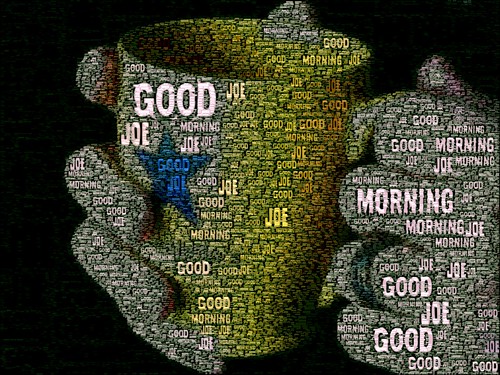
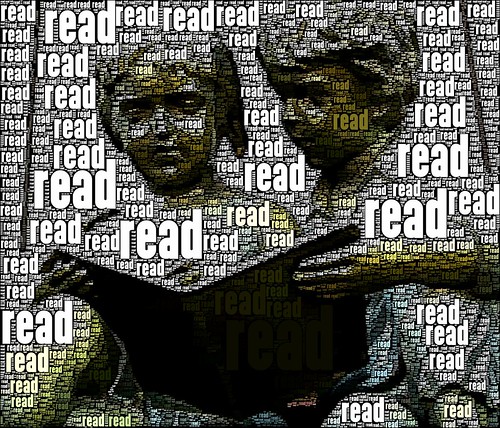
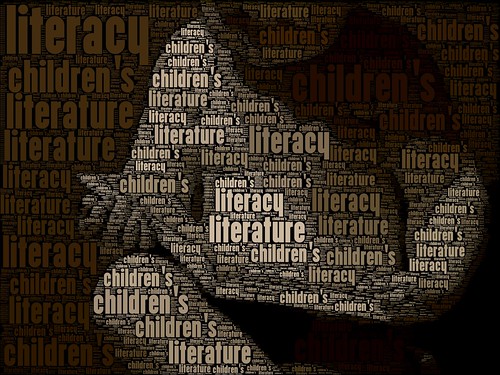
WordFoto is an app that I just learned about that functions like Wordle and Tagxedo. If you have tried these tools and like what they do, you might even like WordFoto more. It configures both words and photos. Here is an example a colleague, Denise Krebs shared. After she created the WordFoto, she uploaded it to Flickr, where I was able to grab the embed code for the image and attribution.
This last one was based on the poem, "And sweetest—in the Gale—is heard—" Here is another one that she created, and offers this description of it: "Children's Literature is Central to Children's Literacy
Read to a child. It will build literacy.
This photo, "Child Reading, by Dihl et Guerhard Manufactory (Boston, MA)," was taken by takomabibelot on Flickr, shared with CC BY 2.0 license. I edited it with WordFoto on my husband's iPod." [http://www.flickr.com/photos/mrsdkrebs/5913123665/in/set-72157628988824805/]
Here is a direct link to the app at the Apple Store, where it is priced at $1.99
To learn more about Denise Krebs, a junior high school teacher, I am including a video her students created about the concept of the Genius Hour, an exciting approach to student learning that a host of teachers have begun to implement in their classrooms.
Today, I came across a tweet from a kindergarten teacher, Matt Gomez, whom I follow on Twitter that caught my attention, particularly the words "reading," "writing," and "documenting." Knowing, Mr. Gomez maintains a resourceful blog (My Hullabaloo), I clicked on the link in the tweet, which brought me to his post.
The post explains how he uses the Doodlecast Pro app with his kindergarteners to document their skills as readers and writers. Mr. Gomez granted permission to use videos of his students using the app, but I encourage you to go directly to his blog post, Documenting Reading and Writing with Doodlecast App for detailed information. While you're at his site, look around. You'll find a host of ideas related to digital literacies, information literacies, and reading and writing. The first video below documents a student reading, and the second, a student writing.
Reading
Writing and Journaling
Here is a screenshot from the Doodlecast page at the Apple Store to help you visualize some of the organizational options. One option allows for uploading to YouTube, a feature that facilitates the sharing of students' accomplishments.
Note that although Mr. Gomez uses the pro version, there is a free version with more limited options, but a good choice if you want to try the app for yourself.
What are some apps or websites you use to promote students' literacies skills? What are your thoughts on how Mr. Gomez uses Doodlecast with his students?